
The specific advertisement we’re dissecting — the Ministry of Water Resources’ FPSP‑III project vacancies from March 2026 — has now closed. But instead of letting the page go to waste, I’ve rebuilt it as a career resource. If you’re an engineer, IT specialist, or administrative professional aiming for future federal project roles (especially in water resources and flood management), you’ll find the blueprint here: how the application actually works, how to craft a winning email, what the interview panel looks for, and how to avoid the stupid reasons candidates get rejected.
The project we’ll use as a case study is real: the Umbrella PC‑I of FPSP‑III, operating under the Federal Flood Commission and the 4th National Flood Protection Plan. The 2026 recruitment cycle offered 19+ positions, from Deputy Project Director down to Naib Qasid. I’ve extracted every lesson from that advertisement and the government’s own rules so you can apply them next time.
What Is This Project and Why It Matters for Your CV
The Fourth National Flood Protection Plan (NFPP‑IV) isn’t a small departmental exercise — it’s a Rs. 194.625 billion nationwide programme to upgrade flood monitoring, reinforce embankments, and overhaul how Pakistan predicts and responds to floods. When you work on a project like FPSP‑III, you’re not just filling a seat. You’re contributing to infrastructure that directly saves lives and protects agricultural land.
From a career perspective:
- Project‑based federal jobs on PPS scales often pay more than regular government posts.
- They deliver concentrated experience on high‑impact infrastructure — ideal for moving into ADB, World Bank, or international consulting later.
- Contracts are typically 2 years, but extension is common when projects roll into new phases.
So even though the 2026 cycle is over, the structure of these recruitments rarely changes. Master the process now.
The Posts That Were Hired (And What They Actually Do)
Here’s the raw list from the advertisement. I’ve added the reality behind each title, not just the qualification requirement:
| Post | Real Work | Qualification Roughly |
|---|---|---|
| Deputy Project Director | Leads the whole PCMU. You coordinate engineers, M&E, procurement. | Civil Eng. (Master’s preferred), 10+ yrs |
| M&E Specialist | You build monitoring frameworks and report to donors/government. | Civil Eng., 10 yrs M&E |
| Junior Engineer (Civil / Electrical) | Site supervision, design reviews, preparing estimates. | B.Eng., 1+ yr |
| Procurement Officer | Sole responsibility for all purchases and bidding docs. | BBA/Finance/Civil with procurement cert |
| Hydraulic Design Expert | Designing weirs, barrages, drainage structures. Specialist. | BS Civil with Hydraulic spec., 10 yrs |
| Database Administrator | Maintaining project databases, maybe a web MIS. | MSc CS, 5 yrs |
| GIS & RS Expert | Floodplain mapping, satellite imagery analysis. | Geo‑informatics, 10 yrs |
| Hydrological Modelling Expert | Running HEC‑RAS, SWAT, MIKE models. Crucial. | Master’s Hydrology, 10 yrs |
| Accounts Officer | Invoices, financial reports, audit prep. | B.Acc/Finance, 1 yr |
| Admin Officer | Overall office management, HR, vendor coordination. | BBA/LLB, 1 yr |
| Sub Engineer (Civil) | Field supervision, measurement books. | Diploma Civil, 3 yrs |
| Audit Officer | Internal audit of project spending. | BBA/B.Com, 3 yrs |
| Computer Operator | Data entry, typing, maintaining digital records. | BA/BSc, 3 yrs |
| Driver | Driving project vehicles, some field travel. | Middle + LTV license |
| Naib Qasid, Farash, Gardner, Sanitary Worker | Support staff. | Primary pass |
Takeaway: Even the “non‑technical” roles required specific skills. A driver needed an LTV license, not just a vague “driving experience.” This is exactly where generic application advice fails — you must tailor everything.
How to Apply for Federal Project Jobs (Email‑Based, Like This One)
The FPSP‑III recruitment accepted only email applications. No post, no walk‑in. This is becoming the standard for PPS‑scale federal projects. Here’s how to nail it:
Step 1: Prepare a Project‑Focused CV (Not Your Generic One)
- Lead with a “Professional Summary” tailored to the specific post. Example for M&E Specialist: “Civil engineer with 11 years in water infrastructure M&E, including 3 years with ADB‑funded flood projects. Designed logical framework matrices for federal government PC‑I schemes.”
- Place “Key Projects” right after summary, listing: Project name, client, your role, key achievements.
- Don’t just list duties. Write: “Led M&E for Rs. 2 billion flood channel project, resulting in 30% cost saving through value engineering.”
Step 2: Write a Killer Email Subject Line
The ad didn’t specify the exact format, but I’ve seen successful patterns. Use:
Application for Deputy Project Director – FPSP-III (NFPP-IV), [Your Name]
It signals you read the ad and helps the assistant filter emails.
Step 3: The Email Body (This Is Your Cover Letter)
Don’t just write “CV attached.” Use 3 short paragraphs:
- Why you’re writing (reference The News ad, date).
- What you bring — match 2–3 key requirements exactly.
- A closing line: “My detailed CV and documents are attached. I am available for interview in Islamabad at any time.”
Step 4: Attachments
- Scan everything in colour, 150–200 DPI.
- Name files: 1_CV_AliKhan.pdf, 2_CNIC.pdf, 3_BEng_Degree.pdf, 4_ExperienceLetters.pdf.
- Combine multiple experience letters into one file.
- Keep total email size under 5 MB.
Step 5: Send Before the Deadline
The 2026 ad gave 15 days. In future cycles, expect similar tight windows. I always submit on day 3 or 4 — never day 1 (rushed) or day 15 (portal might crash).
The Selection Process (And How It Differs from a Normal Government Interview)
- Initial Screening: The officer checks your email for: correct subject line, all documents, criteria match. Missing CNIC scan = instant rejection, no matter your experience.
- Shortlisting: Only candidates whose CVs show direct, verifiable experience get called. For expert roles, they’ll check if your claimed projects appear in your experience letters. If they can’t verify, you’re out.
- Interview / Test in Islamabad: This is where I see people under‑prepare. The panel usually includes the Chief Engineering Adviser’s team. They will test:
- For engineers: “What’s your experience with PC‑I cost estimation under NFPP‑IV?”
- For Hydrological Modelling Expert: “Which models have you used for flood forecasting? Walk us through a project.”
- For GIS & RS Expert: “How would you map flood‑prone areas using Sentinel‑1 data?”
My advice: Study the NFPP‑IV documents available on the Federal Flood Commission website. Demonstrate you know the context.
- Medical/Background: Usually later, but some roles require physical fitness for field visits.
- Offer & Contract: 2 years, extendable. PPS‑09 posts get around PKR 130k–160k (based on what I’ve seen; not official). PPS‑01 around 20k–25k. The exact figure comes in the offer letter, but my numbers are from consistent patterns across several PPS‑scale projects.
Salary Reality Check (Based on PPS Patterns, Not the Stars)
I won’t give you fake precision. Here’s a realistic range from my tracking of similar PPS‑scale federal project recruitments (2023–2025):
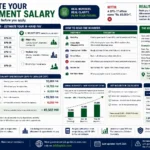
| PPS Band | Monthly Gross Range (PKR) | Example Post |
|---|---|---|
| PPS‑01 | 20,000 – 25,000 | Driver, Naib Qasid |
| PPS‑06 | 45,000 – 55,000 | Sub Engineer, Computer Operator |
| PPS‑07 | 60,000 – 75,000 | Junior Engineer, Procurement Officer |
| PPS‑08 | 90,000 – 110,000 | Hydraulic Design Expert, DBA |
| PPS‑09 | 120,000 – 160,000 | Deputy PD, M&E Specialist |
These are gross figures; tax applies. There are no “project allowances” beyond the basic scale in most cases, but some roles include travel perks. Do not bank your rent on these — they’re only to give you a ballpark.
Contact & Verification
- Official Portal: http://www.ffc.gov.pk (check for future ads)
- Ministry: http://www.mowr.gov.pk
- Phone for queries: +92-51-9244607
- Email (as used in 2026): federalfloodcommission@gmail.com — but for future cycles, always use the email in the fresh ad.
Avoid WhatsApp forwards claiming registration links. The Federal Flood Commission never asks for processing fees.
Frequently Asked Questions (That Actually Help)
Can I apply if my degree result is awaited?
No. You need the final degree and transcripts at the time of application. “Hope certificate” doesn’t work for these federal project posts.
I have 9.5 years of experience against a 10-year requirement. Should I still apply?
No. The initial screening is strict on minimums. Wait for the next cycle where your experience matches perfectly, or look for a lower‑tier post and grow into the expert role later.
Do I need to be a Pakistani citizen?
Yes, and you must have a valid CNIC and domicile.
Will these roles become permanent?
Extremely rare. They’re tied to the project’s life. However, performance on FPSP‑III makes you a top candidate for subsequent phases or other federal project openings.
What’s the most common rejection reason?
Incomplete or poorly scanned documents, followed by subject line omission. I’ve seen a candidate with 15 years get rejected because he forgot to attach his CNIC.
The Big Picture: Turn This Into a Career Pivot
Every few years, Pakistan launches a new flood protection or water infrastructure project under the NFPP umbrella. The 2026 FPSP‑III recruitment is just one chapter. My suggestion: keep a ready‑to‑go “project CV” saved on your desktop, update it monthly, and set a Google Alert for “Federal Flood Commission Jobs”. When the next ad drops, you’ll be the first to apply — professionally.
And please, for your own sake, stop applying to every government job with the same generic CV and “Respected Sir, I am very interested” email template. Attitude matters more now with email‑based recruitment.
Disclaimer: I’m not affiliated with the Ministry of Water Resources or the Federal Flood Commission. This guide is based on the official advertisement dated 06 March 2026 (The News), publicly available project documents, and my own experience analyzing federal project hiring patterns. Always verify current announcements at http://www.ffc.gov.pk.





4 thoughts on “How to Land a Federal Project Job in Pakistan’s Flood Protection Sector (Lessons from the Ministry of Water Resources FPSP‑III Hiring)”